The first time Abu Dhabi appears to most visitors is not on the corniche or inside a museum — it is through tempered glass on a highway leaving AUH, with desert on one horizon and towers assembling on another. Airport-to-city bus context matters because that approach frames everything that follows: distances feel larger than maps suggest, islands emerge as separate landforms, and the capital reveals itself as a city planned along arterial roads rather than a walkable historic core. This essay documents what narrated coaches and municipal airport services show new arrivals, how arrival sequencing differs from leisure loops, and what riders should notice before the first hotel check-in.
Two arrival bus contexts
New arrivals encounter buses in two distinct contexts. Airport transfer coaches and municipal routes serve practical movement from terminal to hotel districts — enclosed, direct, minimal narration, optimised for luggage and fatigue. Sightseeing tours sometimes offer airport-adjacent boarding or day-one loops that begin near hotel clusters fed by transfer traffic; these are leisure products with narration, staged stops, and upper-deck options rather than terminal-to-lobby efficiency.
Conflating the two creates disappointment. A transfer coach is not a tour; a tour loop is not the fastest path to a hotel after a long flight. This essay focuses on what the window teaches during airport-corridor travel regardless of format — the spatial introduction — while noting that narrated day-one tours extend that introduction into corniche and landmark segments covered in our other guides.
Highway geography after AUH
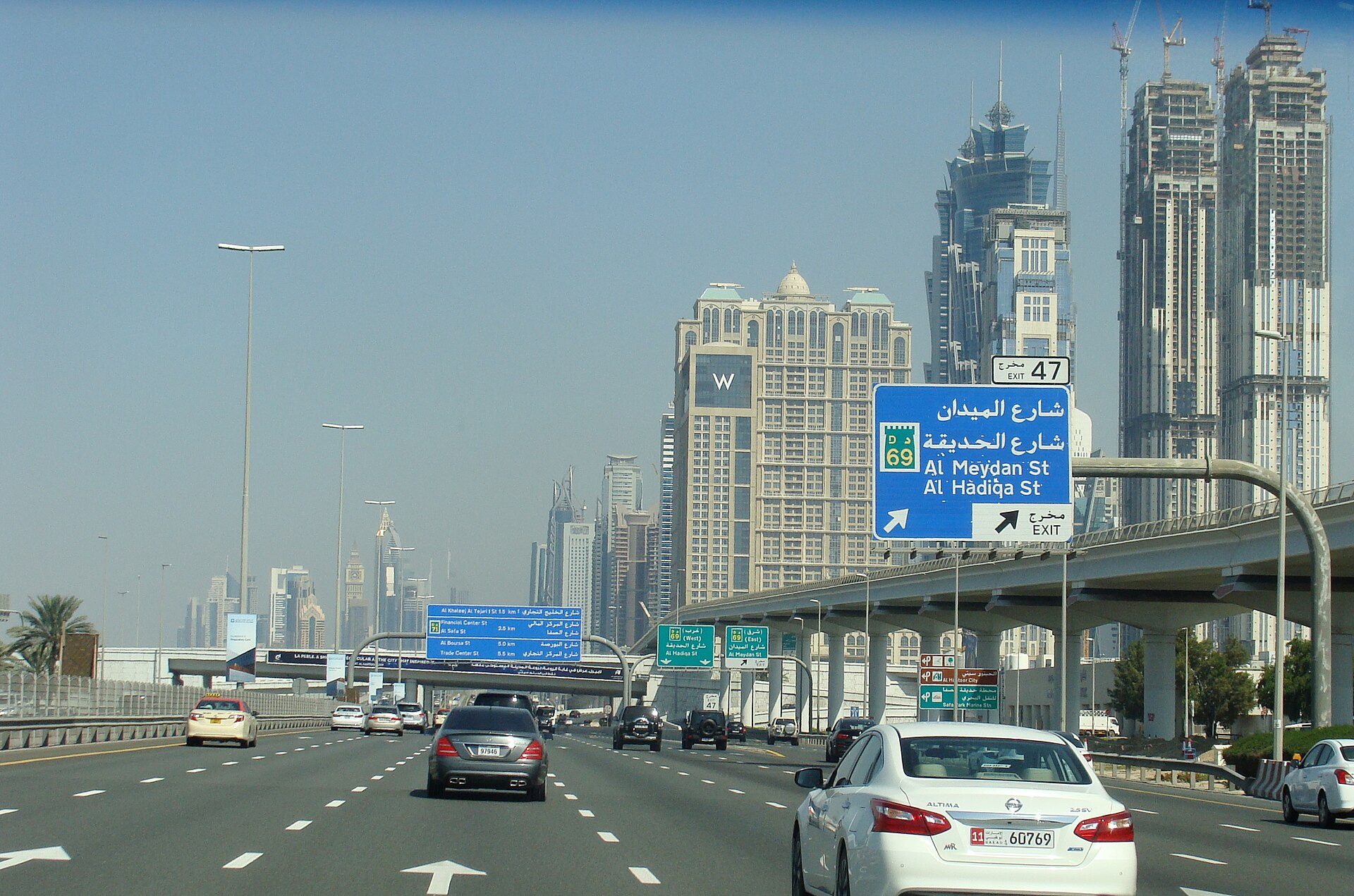
Leaving the airport, riders see desert-edge landscape give way to infrastructure scale — multi-lane highways, interchange geometry, and signage that names islands and districts in Arabic and English. Towers do not appear all at once; they accumulate. Saadiyat, Yas, and mainland clusters enter sightlines at different moments depending on routing. Narration on tour coaches often begins here with emirate history compressed into ten minutes — pearl diving, federation, oil-era growth — while transfer riders hear only road noise and air conditioning.
Distance perception is the critical lesson. Abu Dhabi feels expansive from the highway in ways that flat phone maps understate. Island bridges, channel water, and setback landscaping consume time even when landmark dots on a screen appear close. Understanding that scale early prevents over-scheduling day one.
What to notice from the window
Even exhausted arrivals benefit from three orientation cues. First, note which water body appears — open Gulf versus narrower channels — because that identifies corniche versus island routing. Second, watch for mosque white on the horizon; the Grand Mosque often registers as a distant geometry before any closer visit. Third, observe how towers cluster — financial-district islands versus mainland spread — because that clustering predicts how later bus loops will sequence districts.
- Desert-to-city transition — the capital does not begin at kerb level; it assembles from highway sightlines.
- Island naming on signage — Reem, Saadiyat, Yas become real names before you step onto any bridge.
- Heat and light through glass — afternoon arrivals see harsh glare; evening arrivals may catch first tower lighting.
If you board a narrated tour on day one rather than a direct transfer, treat the airport highway leg as prologue — narration is densest here because landmarks are sparse. Save attention for corniche and mosque segments later on the same loop.
Day-one tour versus transfer rhythm
Some visitors connect directly from terminal to hotel and tour the next day; others board a capital loop the same afternoon. Day-one touring demands energy — heat, jet lag, and upper-deck exposure compound. Winter arrivals handle this better than summer. Families with children often prefer hotel settlement first; photographers chasing golden hour may prefer immediate loop boarding if timing aligns with late-afternoon departures.
Municipal airport buses serve specific hotel corridors and interchanges at low cost. They teach the same highway geography without narration. Riders comfortable decoding maps and ITC route numbers can learn orientation cheaply, then ride a narrated loop on day two with context already partially formed. Neither choice is superior — fatigue and season decide.
Linking arrival context to wider routes
Airport highway segments appear again on Masdar approaches and eastern corridor tours — the same desert-edge vocabulary recurs when loops exit the island core. Recognising that recurrence helps riders understand Abu Dhabi as a multi-centre emirate rather than a single downtown blob. Arrival context also explains why public buses and tour coaches share some arterials yet feel different — same road, different intent, as we document in our public-versus-sightseeing comparison.
We publish this essay for travelers who want the capital to make sense before the first museum queue or corniche walk. The airport approach is not a scenic highlight in the brochure sense — it is the prologue. Read it carefully through the window, and the rest of Abu Dhabi's bus tour geography becomes easier to follow.